Call us now :08071931009
 Send Inquiry
 Send Inquiry
Glass Lactometer
Glass Lactometer Specification
- Control Type
- Manual
- Shape
- Cylindrical
- Temperature Resistance
- Up to 100C
- Accuracy
- 1 Lactometer degree
- Glass Type
- Transparent Borosilicate Glass
- Features
- Easy to use, durable, clear scale
- Display Type
- Scale Engraved/Printed on Glass
- Type
- Glass Lactometer
- Dimension (L*W*H)
- Approx. 15 cm (L); width and height vary as per model
- Equipment Type
- Laboratory Glassware
- Equipment Materials
- Glass
- Power
- Not required (Manual Operation)
- Material
- Borosilicate Glass
- Application
- Measuring purity and density of milk
- Scale Range
- 16 to 40 (lactometer reading)
- Usage
- For testing purity and quality of milk
- Color
- Clear with printed scale
- Reading Method
- Direct visual
- Packing Type
- Box
About Glass Lactometer
Features:- Accurate reading
- Light weight
- Temperature resistance
Specifications:
- Range 0-40, calibrated at 84 0 F zeal
- Made of borosilicate/Neutral Glass
Characteristics:
- Lactometer Zeal Type Range 0-40 For mixtures of Milk and Water
- Lactometer Zeal Type Range 0-40 Paper Scale Mercury Polished
- Lactometer Zeal Type Range 0-40 Metal Scale Mercury Polished
- Lactometer Range (15-40) 1.015 1.040 at Temp.15.5 C App. Length 190 MM With sub division of 0.5
- Lactometer Range (20-35) 1.020 1.035 at Temp 27 C App. Length 200 MM With sub division of 0.5
- Lactometer Range (15-25) 1.015 1.025 at Temp 15.5 C App. Length 220 MM With sub division of 0.5
- Lactometer Range(25-35) 1.025 - 1.035 at Temp 15.5 C App. Length 220 MM With sub division of 0.5
- Lactometer with Inbuilt Thermometer Range 1.020 1.040 at 20 C
- Lactometer with Inbuilt Thermometer Range 1.020 1.035 at 20 C
Reliable Milk Purity Testing
This glass lactometer provides a straightforward and dependable method for assessing the purity and density of milk in laboratory or industrial settings. The direct visual reading and clearly printed scale enable accurate results every time, ensuring consumer safety and quality assurance. Its manual control and durable borosilicate glass construction make it suitable for regular use in quality control applications.
User-Friendly and Durable Design
Engineered for practicality and precision, the lactometer is cylindrical and lightweight, measuring about 15 cm in length. The printed engraved scale offers high visibility, while the borosilicate glass ensures resistance to temperature changes up to 100C. Its robust design allows for repeated use without compromising accuracy or clarity, making it a trusted tool for professionals in the dairy industry.
FAQs of Glass Lactometer:
Q: How does the glass lactometer measure the purity and quality of milk?
A: The glass lactometer works by floating in a sample of milk, and its scale reading indicates the milks density. This density correlates with quality and purity, allowing you to detect dilution or adulteration. To use, simply immerse the lactometer in milk and read the value where the air-liquid interface meets the printed scale.Q: What is the process for using the glass lactometer?
A: To use the lactometer, pour the milk sample into a tall, transparent container. Gently lower the lactometer into the milk and let it float. Ensure the device is not touching the bottom or sides. Read the value on the scale at the liquid surface for an accurate measurement of milk density.Q: When should I use this lactometer?
A: This lactometer is ideal for use whenever you need to evaluate the purity or density of milk, whether in a laboratory, dairy plant, educational institution, or even in quality checks by milk suppliers and exporters.Q: Where can the glass lactometer be used?
A: The lactometer can be used in various settings such as laboratory environments, dairy processing facilities, quality control departments, and testing centers. Its designed for both professional and educational applications wherever milk quality needs to be assessed.Q: What are the benefits of using a glass lactometer made from borosilicate glass?
A: Borosilicate glass construction offers excellent resistance to thermal shock, maintaining integrity up to 100C. This guarantees durability, repeated usability, and precise readings, even with frequent sterilization and cleaning.Q: How accurate is the scale on this glass lactometer?
A: The lactometer provides readings with an accuracy of 1 lactometer degree, ensuring reliable results for determining milk purity and density.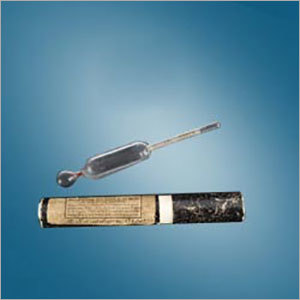
Tell us about your requirement

Price:
Quantity
Select Unit
- 50
- 100
- 200
- 250
- 500
- 1000+
Additional detail
Mobile number
Email

More Products in Glassware Products Category
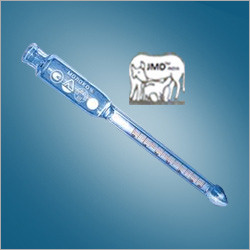
Glass Butyrometer
Features : Graduated Markings, Clear Visibility, Chemical Resistant, Laboratory Grade
Dimension (L*W*H) : Approx. 18 cm (length), 1.5 cm (diameter)
Equipment Materials : Borosilicate Glass
Type : Other, Glass Butyrometer
Accuracy : 0.01%
Shape : Cylindrical
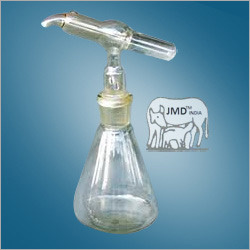
Tilt Measure
Features : Magnetic base, Portable, High precision, Backlight display
Dimension (L*W*H) : 60 mm x 30 mm x 13 mm
Equipment Materials : ABS Plastic
Type : Other, Digital Tilt Measure
Accuracy : 0.1
Shape : Rectangular
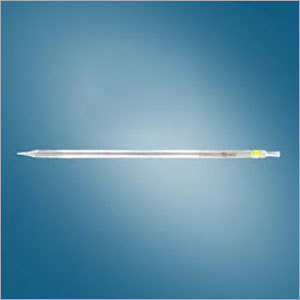
Glass Pipette
Features : Reusable high transparency calibrated
Dimension (L*W*H) : Varies based on pipette size
Equipment Materials : Glass
Type : Other, Pipette
Accuracy : High precision
Shape : Cylindrical

 Send Inquiry
Our Products
- Plastic Product
- Bulk Milk Coolers
- Can Scrubbers
- Cream Separator Machine
- Khoya Making Machine
- Milk Cans
- Milk Collection Accessories
- Milk Cream Separator Machine
- Milk Fat Testing Machine
- Milk Stirrers
- Milk Tanks
- Milking Machine
- Lock Stoppers
- Milk Collection Utensils
- Nano Milking Machine
- Milk Centrifuge Machine
- Glassware Products
- Lab Equipment

F-11/18, Krishna Nagar,Delhi - 110051, India

Mr. Manoj Goel
(Director)
Mobile :08071931009
 Send Inquiry
 Send SMS
Developed and Managed by Infocom Network Private Limited.
